
F1 Qualifying Predictor
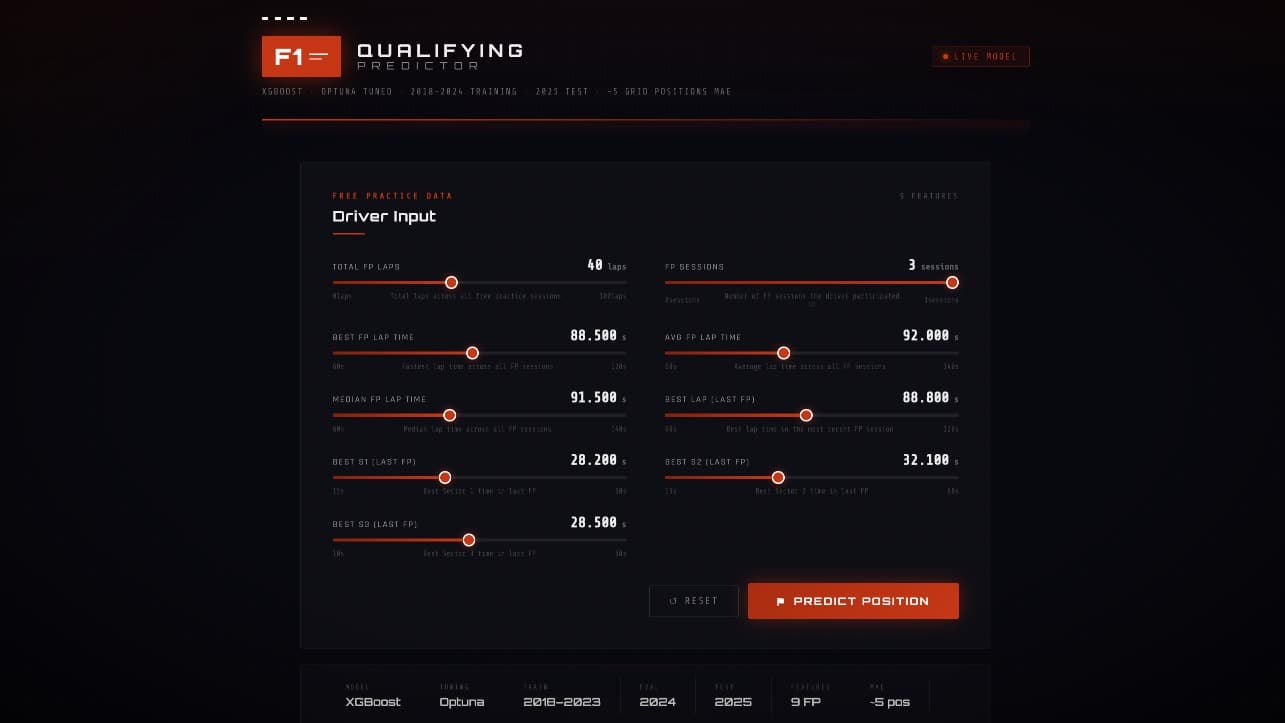
An XGBoost model that uses Formula 1 free-practice statistics to predict where a driver may qualify on the grid.
Project Details
About the Project
Formula 1 qualifying sessions are influenced by a wide range of factors, from driver performance to lap consistency.
Combining our interest in Formula 1 with machine learning, we developed a qualifying grid position predictor that estimates a driver’s qualifying position using data from free practice sessions.
How It Works
We built an XGBoost model trained on historical Formula 1 data, using features such as lap times, sector times, and practice session statistics to predict qualifying outcomes.
We deployed the model through an interactive web application where users can input driver performance metrics and receive a predicted grid position.
Project Outcome
While we successfully trained and deployed the application, we found that the live system did not perform exactly as intended.
Despite this, the project provided us with valuable experience in applying machine learning to a real-world sports analytics problem and deploying a predictive application.
Key Takeaway
We gained a deeper appreciation for the challenges involved in integrating machine learning models, particularly because it can be difficult to ensure the accuracy of the model itself.