
TOMO
An AI study buddy on Telegram that proactively sends scheduled bite-sized lessons and quizzes, tracks progress, and revisits weak areas to build consistent learning habits.
Project Details
About the Project
Ever wanted to learn something new, but struggled to stay consistent?
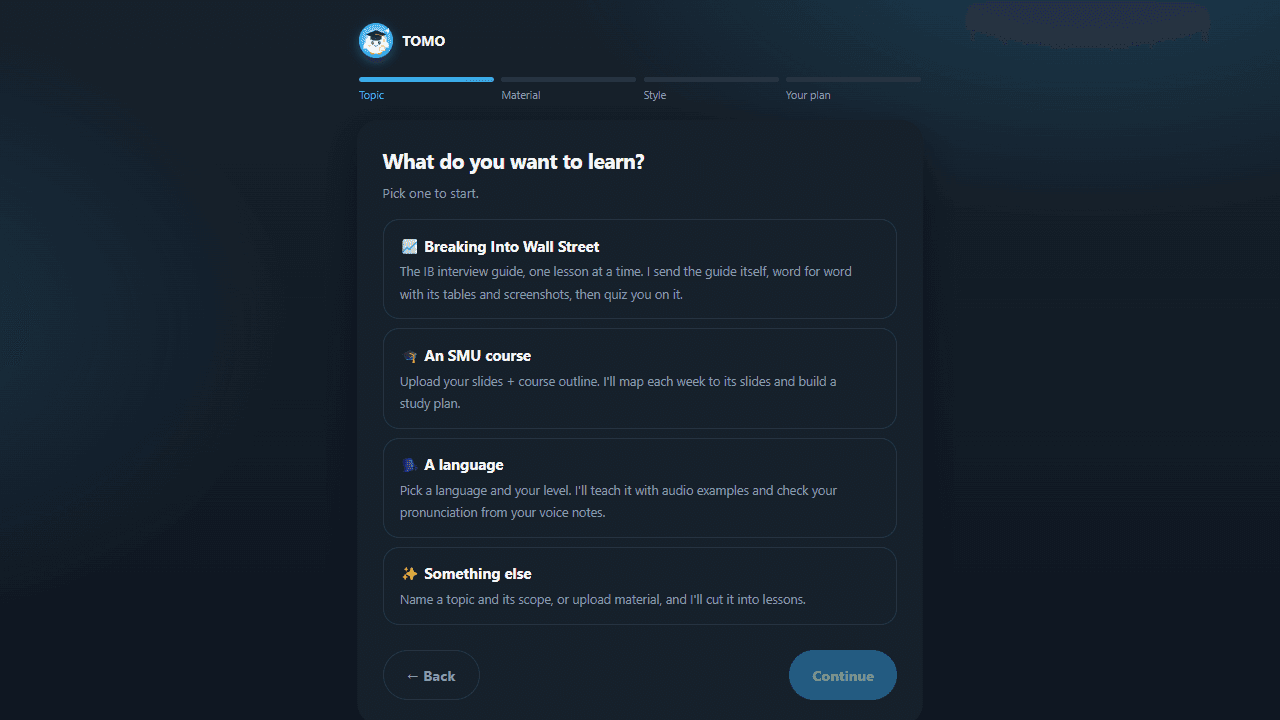
I built TOMO, a personal AI study buddy on Telegram. Users tell it what they want to learn, upload study materials if they have any, and choose how often they want to study. From there, TOMO takes the initiative, messaging them with bite-sized lessons and quizzes at their chosen time.
Rationale
TOMO started with a simple frustration: I wanted to learn consistently, but kept forgetting to actually do it. I first noticed this while teaching myself finance with Breaking Into Wall Street, where opening PDFs and finding where I left off became a hassle. At SMU, I also wanted to test my understanding of lectures regularly instead of cramming before finals, and to practise my Chinese every day.
Traditional AI chatbots wait for you to start the conversation. I wanted one that checks in on you instead.
How It Works
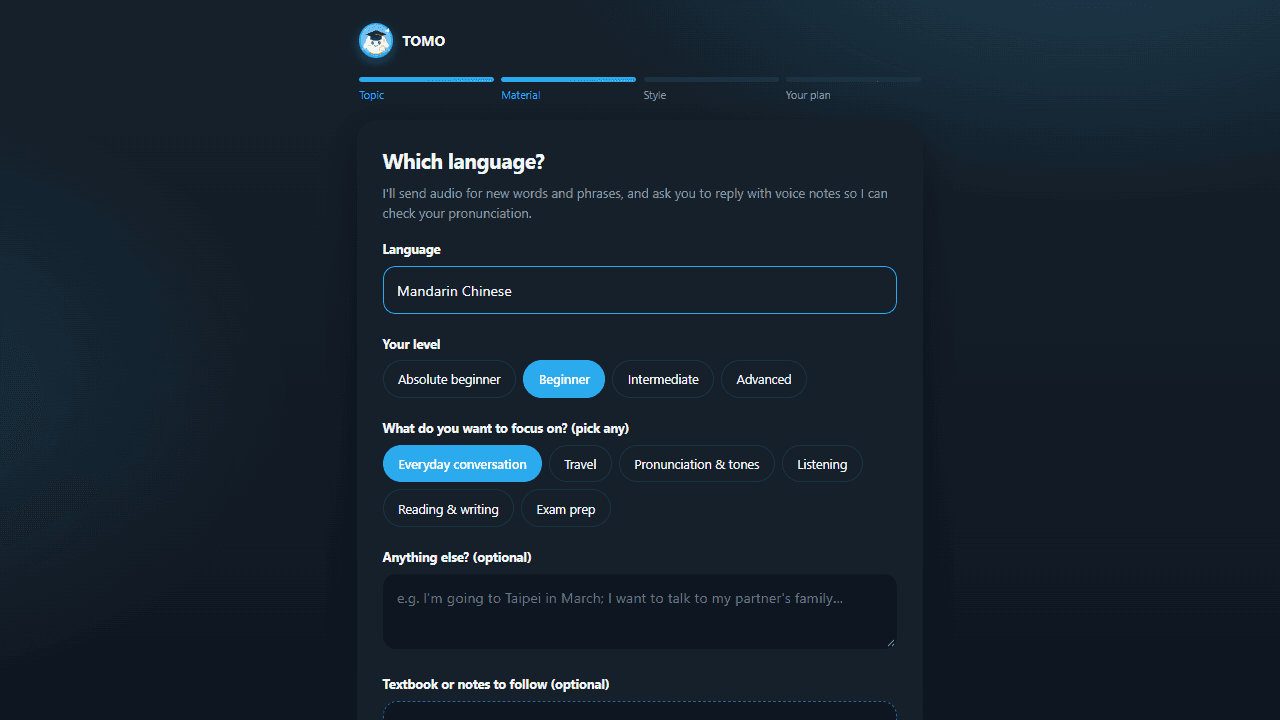
Users set up a learning plan on a simple website, for a week, a month, a custom length or indefinitely, and pick one of three experiences:
- university courses — upload course outlines, lecture slides and past papers, and TOMO teaches from them and generates related quiz questions;
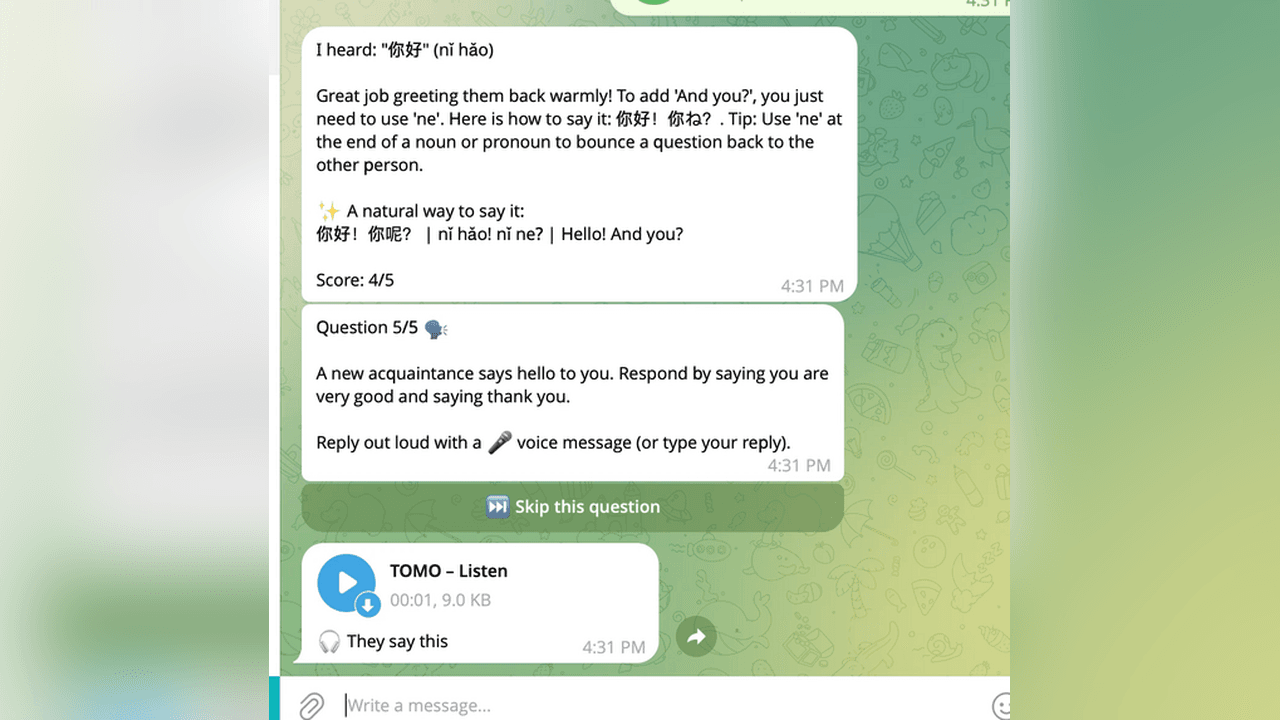
- language learning — vocabulary, listening and conversation practice, with audio dialogues and feedback on voice messages; and
- learn something new — explore any topic without uploading materials.
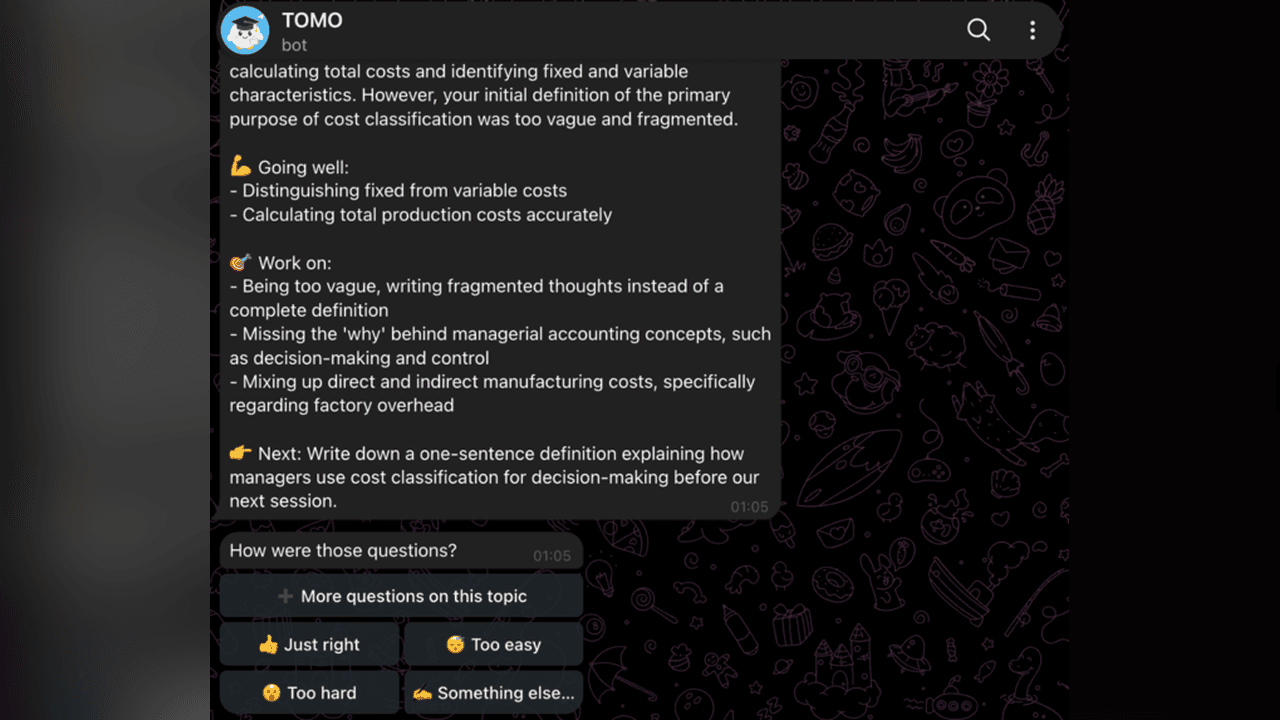
TOMO remembers what each lesson covered, quizzes users on it in later sessions, and helps them think through mistakes instead of revealing the answer straight away. Users can say whether questions were too easy or too hard, and TOMO adjusts future sessions.
Under the Hood
The frontend uses Vite, with a Flask backend on Vercel and Neon PostgreSQL storing plans, history and quiz performance. Telegram connects through a webhook, and a scheduler checks for due sessions every minute. Gemini Flash Lite handles text and audio, with GPT-4o-mini as a fallback, and multiple-choice and true-or-false answers are graded instantly without an extra AI call.
I ran eight adversarial attacks against the actual AI system. One found a real flaw: an answer containing fake grading JSON could receive full marks. I fixed it and re-tested alongside 102 automated checks. TOMO doesn’t have user accounts yet, and its pronunciation feedback is approximate.
Project Satisfaction
I’m proud of the cute interface and the automation behind it. I’ve been using TOMO for my own Breaking Into Wall Street learning, and I enjoy answering the questions and learning new things.
Biggest Challenge
Reliability took far more than a good prompt. A serverless host can’t keep a bot running, so I combined a webhook, a per-chat database lock and a one-minute scheduler. The AI also “heard” whatever pronunciation target it was given, so it now transcribes voice messages blind before comparing, and one missing comma in a long JSON quiz once crashed a session, which led to strict JSON, automatic repair and retries.
Areas for Improvement
With more time, I would test each section more and build out the user experience. I’d also prepare ready-made versions of the SMU modules I’ve taken that no longer need uploading, and get more people using TOMO for feedback.
Build a project with us
Join AI Lodge, build with your track through the semester, and show your project at Hack Day. We will feature it here.