
NoWaste
A food-waste helper that turns grocery receipts into a live pantry, tracks freshness, suggests rescue meals and helps share surplus food with people nearby.
Project Details
About the Project
Household food waste often happens because people forget what they bought, overbuy, or realise too late that food will go unused.
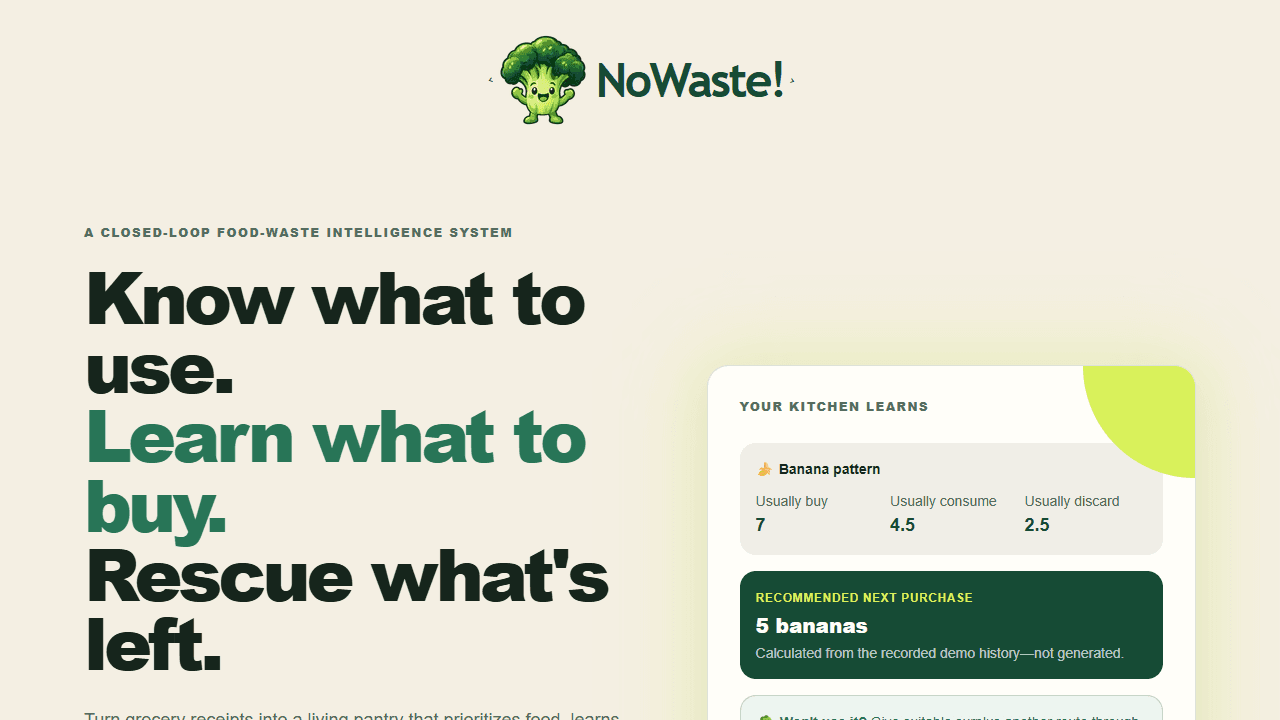
NoWaste turns grocery receipts into a live pantry, tracks freshness, learns from consumption and waste patterns, suggests better future purchases and helps users share surplus food nearby. I built it as a full loop, from purchase to consumption, learning and community rescue.
How It Works
NoWaste brings together:
- receipt to pantry — AI reads a grocery receipt photo, turning names like
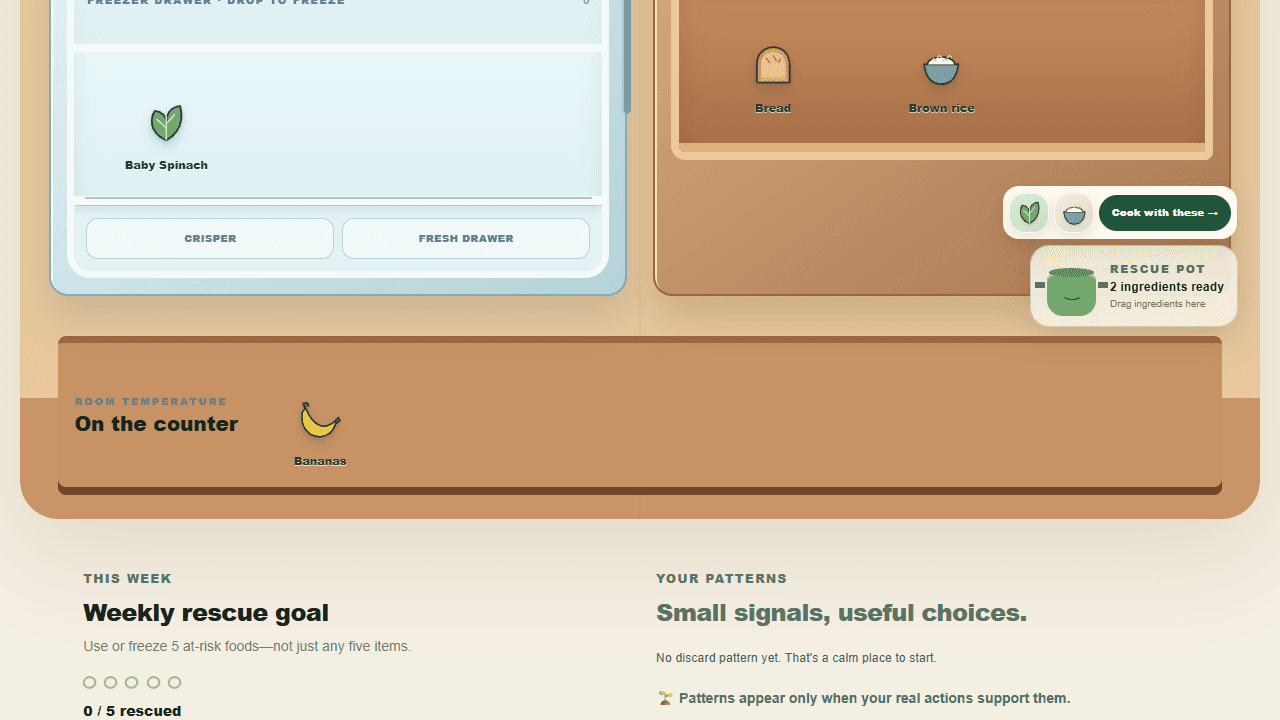
CHKN BRST BF 500Ginto real items you review before they’re added; - a digital kitchen — storage rules turn purchase dates into freshness priorities, and you drag items to consume, freeze, discard or share them;
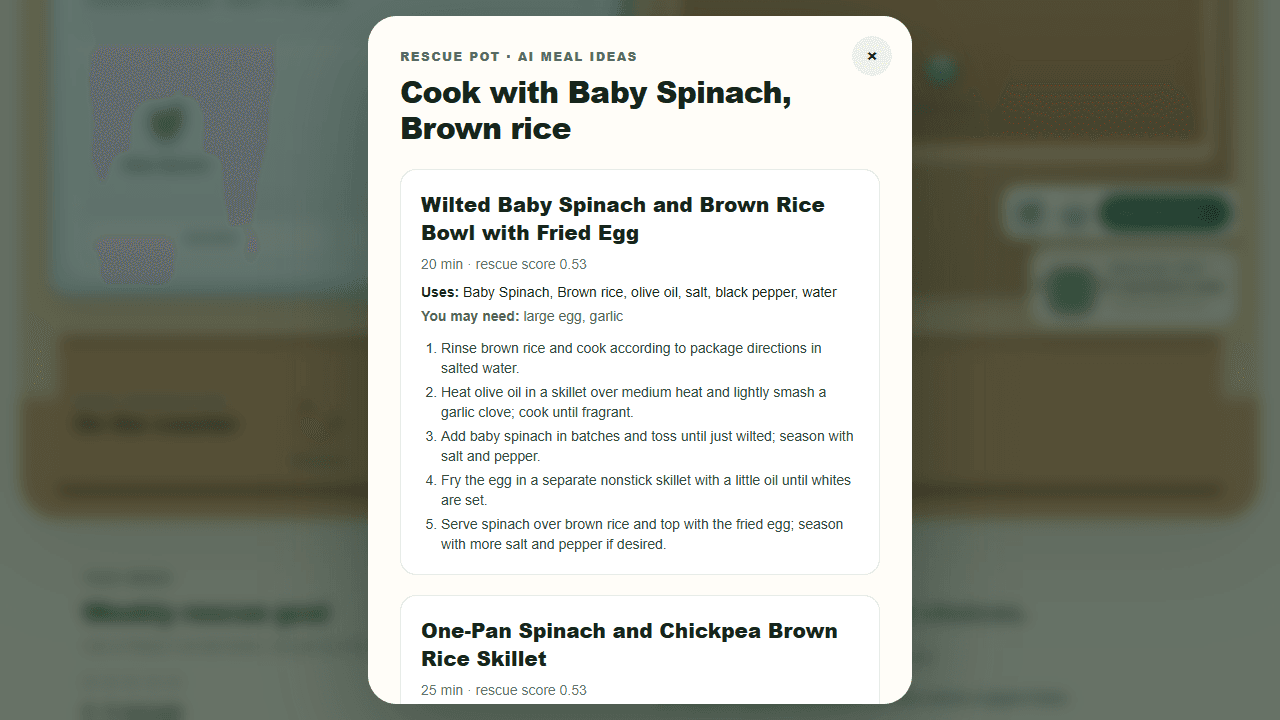
- the Rescue Pot — add at-risk items and get AI meal ideas to use them up;
- the Coach — learns from what you eat and throw away to suggest how much to buy next time; and
- Community Rescue — helps you share surplus food with people nearby.
Telegram is connected for receipt uploads and notifications.
How I Built It
I combined AI for receipt understanding and meal suggestions with rule-based logic for freshness, recommendations, sharing eligibility and privacy. The app is built with Next.js, React and TypeScript, with Supabase storing pantry, behaviour and community-rescue data, the OpenAI API powering the AI features and Leaflet for maps.
Balancing useful AI with food safety, privacy and reliable recommendations was the biggest design challenge, so the app is clear that it shows a freshness priority, not a food-safety guarantee.
Project Satisfaction
I’m most proud that I built NoWaste as a real full-stack system rather than just a frontend prototype: multiple APIs, Supabase for the data, Telegram for receipts and notifications, and the logic that ties them into one working flow. Most of all, I learnt how important it is to design AI around a real user problem, rather than adding it for its own sake.
Biggest Challenge
Getting Supabase working reliably, from the database schema, environment variables and permissions to making sure data flowed correctly between the frontend, backend and Telegram. I tested each connection step by step, simplified the data flow and separated database operations from the AI logic, so issues were easier to trace and fix.
Areas for Improvement
With more time, I’d improve personalisation by training a predictive model on real purchase and waste history, strengthen Community Rescue matching, and expand the food-storage dataset.
Build a project with us
Join AI Lodge, build with your track through the semester, and show your project at Hack Day. We will feature it here.