
Study Booth
A cosy web app for friends who study apart, sharing fog-glass doodles, retro photos and card notes under scratch-off foil, with AI moderating every post.
Project Details
About the Project
Studying alone is lonely, and the usual fix makes it worse.
When I study by myself, I miss having a friend at the next desk, so I open the group chat “just to check”. Twenty minutes later, the study session is gone. Phones and social feeds are built to hold our attention, not give it back. I wanted the feeling of studying side by side with friends, without the feed, the notifications or the phone.
What It Does
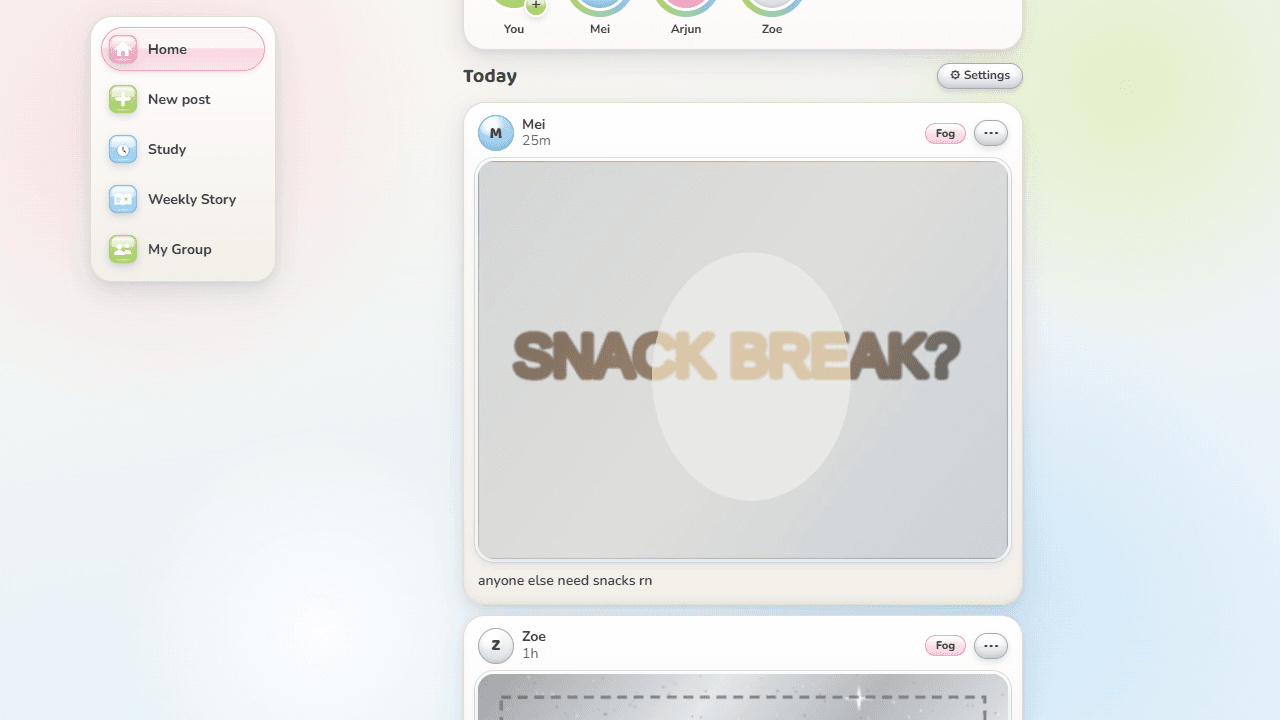
Study Booth is a laptop web app for small groups of friends who study apart. A calm widget floats over your notes, and friends send each other small, handmade-feeling moments:
- fog glass — blow into your mic to fog up the camera view, then write a message in the fog with your finger (tracked on-device) or the mouse;
- photo — a webcam snapshot with retro filters, like a 2000s digicam with an orange date stamp; and
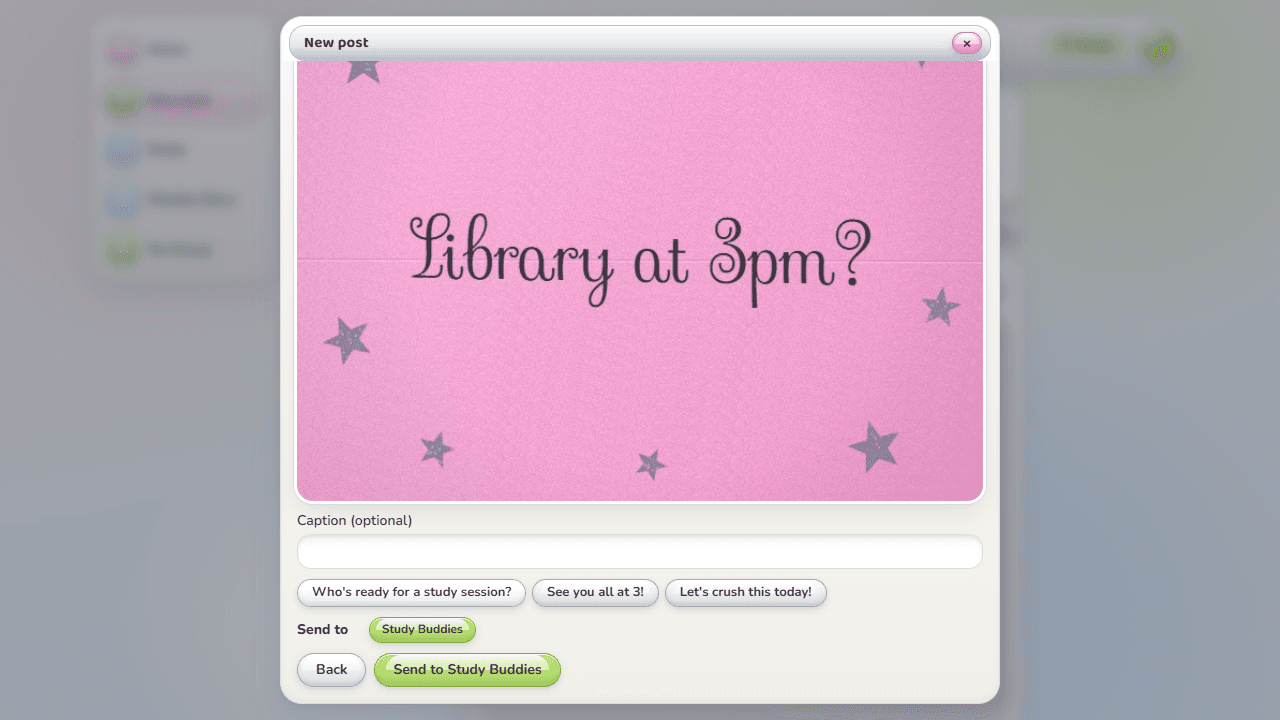
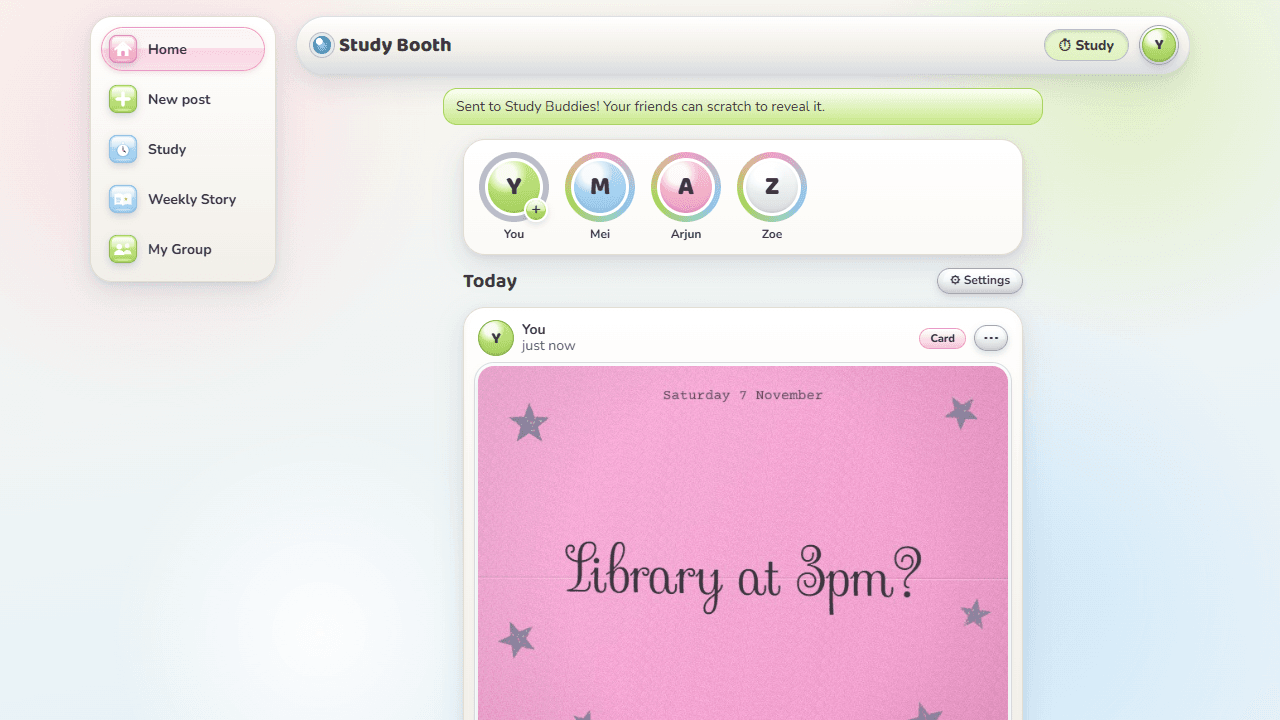
- card note — a short message in handwritten script on a stamped paper card.
Posts arrive under scratch-card foil, and friends scratch them off to reveal them. There’s no endless feed, only the last 24 hours, and focus mode hides new posts until your study timer ends.
AI works quietly in the background. It reads the handwriting in every post and blocks anything mean or unsafe before friends see it, suggests captions based on the photo and how long you’ve been studying, nudges the group to stretch at the right moment, and writes a weekly story from the group’s real study stats.
How I Built It
The frontend is Next.js and React with a custom glossy Y2K “gadget” design, where all the art and icons are original CSS and SVG. The Web Audio API detects blowing, Canvas draws the fog, filters and foil, and MediaPipe HandLandmarker runs entirely in the browser so you can pinch to write. Supabase handles sign-in, Postgres with Row Level Security on every table, private photo storage and live updates, and Claude is called only from server routes, with every response validated against a zod schema.
I wrote a detailed proposal and spec first, then built it with AI coding agents, reviewing and testing each phase.
Safety by Design
Some users are students under 18, so safety was designed in from the start. Every post is saved as pending, and only the server can approve it after moderation. If the AI fails, the post is held (fail closed), and text found in images is treated as data, never as instructions, which protects against prompt injection written in the fog. A red-team suite of 28 cases, covering harmless posts, mean posts, prompt injections, sarcasm and slang, passes at 100%, and a scripted two-friend end-to-end test passes 60/60 checks.
Project Satisfaction
My favourite moment was writing in the fog on one laptop and watching it appear under foil on another a few seconds later. I’m also proud of turning a proposal doc into a deployed, working app in days.
Biggest Challenge
Every post was getting blocked. I assumed my moderation prompt was too strict, but the AI requests were failing through our API proxy, and fail-closed moderation correctly held anything it couldn’t check. Lesson: check the plumbing before blaming the prompt. I also hit the email sign-up limit and switched to password sign-in, and cut features I loved, like embroidered and rhinestone note styles, to ship something reliable.
Key Takeaway
AI makes building fast, but deciding what to build, what to cut and how to keep people safe is still on you. A clear spec and clear prompts matter more than any single line of code, and safety works best as a design principle: fail closed, treat user content as data and keep AI output as suggestions.
Build a project with us
Join AI Lodge, build with your track through the semester, and show your project at Hack Day. We will feature it here.